TRT Clinic vs. Comprehensive Hormone Optimization
Aug 28, 2026
You have already done physical therapy and cortisone injections without long-term improvement and had a consultation with a surgeon to discuss the possibility of surgery. The trouble is, you are still running, lifting, competing, and trying to perform at the level your life requires, and to you, surgery feels like a trap door, not a solution.
That is exactly where bone marrow concentrate becomes a relevant conversation.
BMC is a clinically supported orthobiologic treatment built entirely from your own biology, designed to drive real tissue repair in joints and tendons when conservative treatments have failed and you want to avoid surgery, or are not yet a candidate for it.
Here is what it actually is, how it works, and what the evidence says.
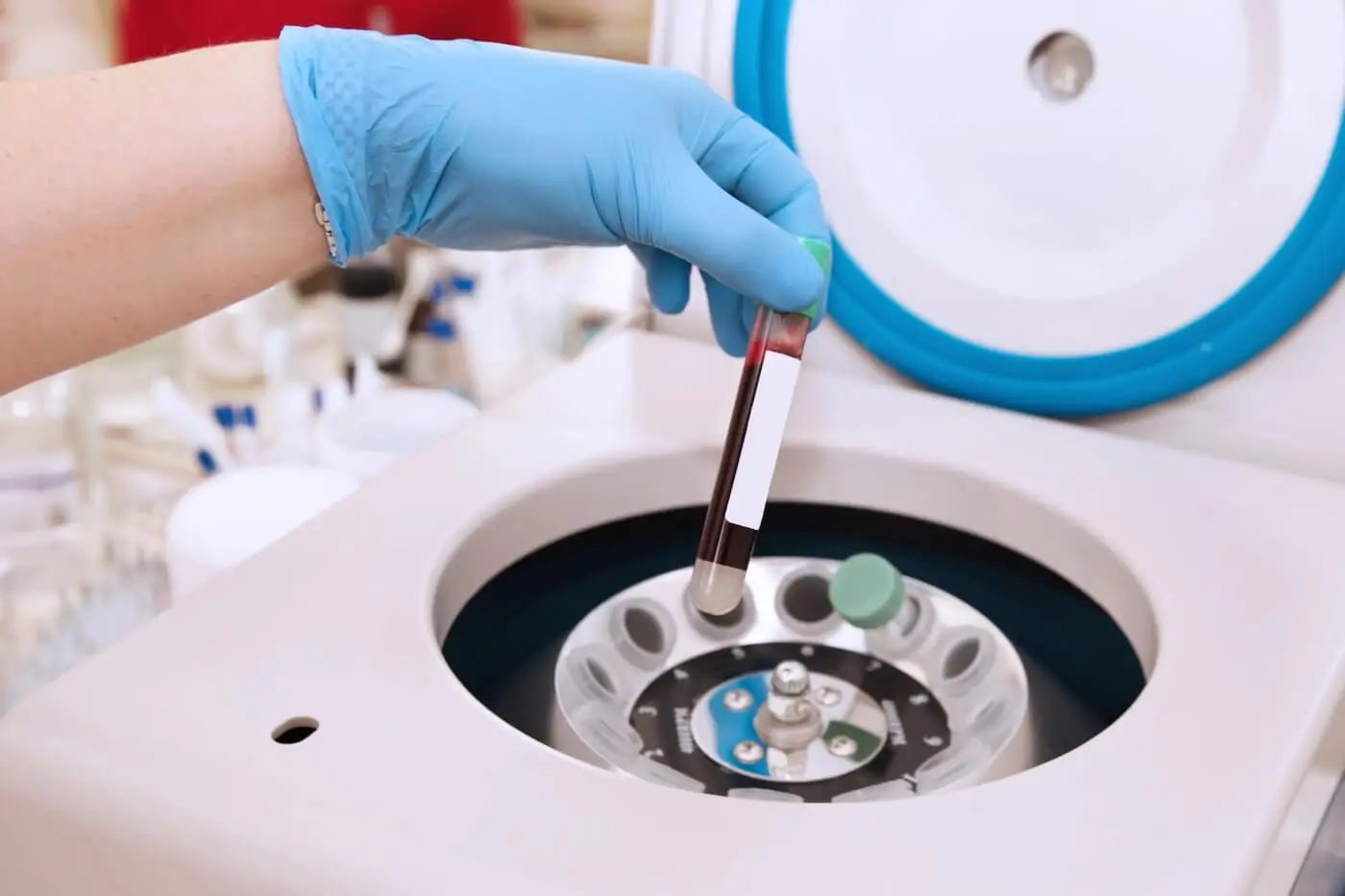
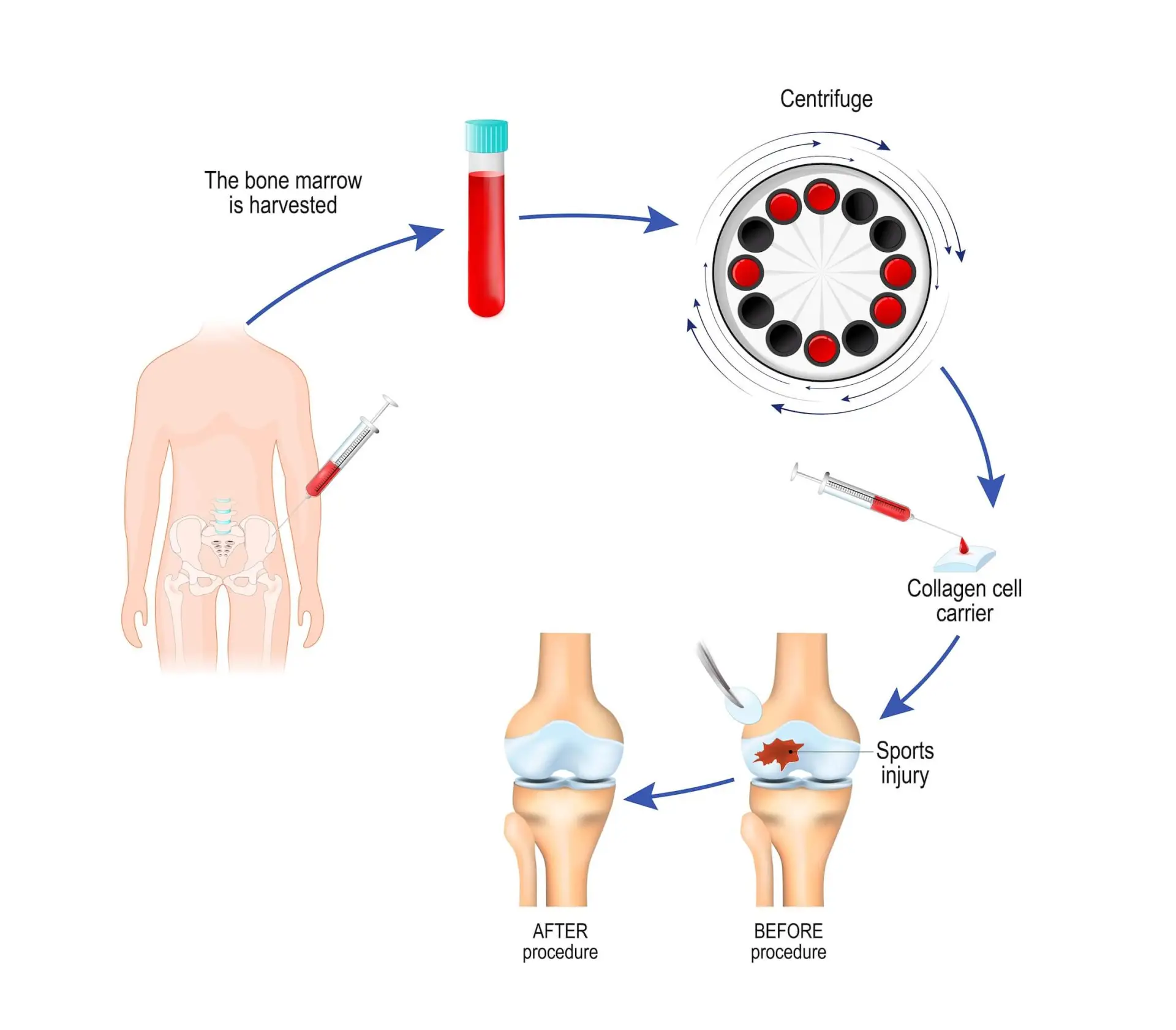
Bone marrow concentrate (BMC), also called bone marrow aspirate concentrate (BMAC), is an orthobiologic treatment derived from your own bone marrow. The marrow is harvested, concentrated through centrifugation, and injected directly into damaged tissue. The result is a multi-component biological product that delivers mesenchymal stem cells, growth factors, platelets, and anti-inflammatory cytokines to stimulate structural repair at the cellular level.
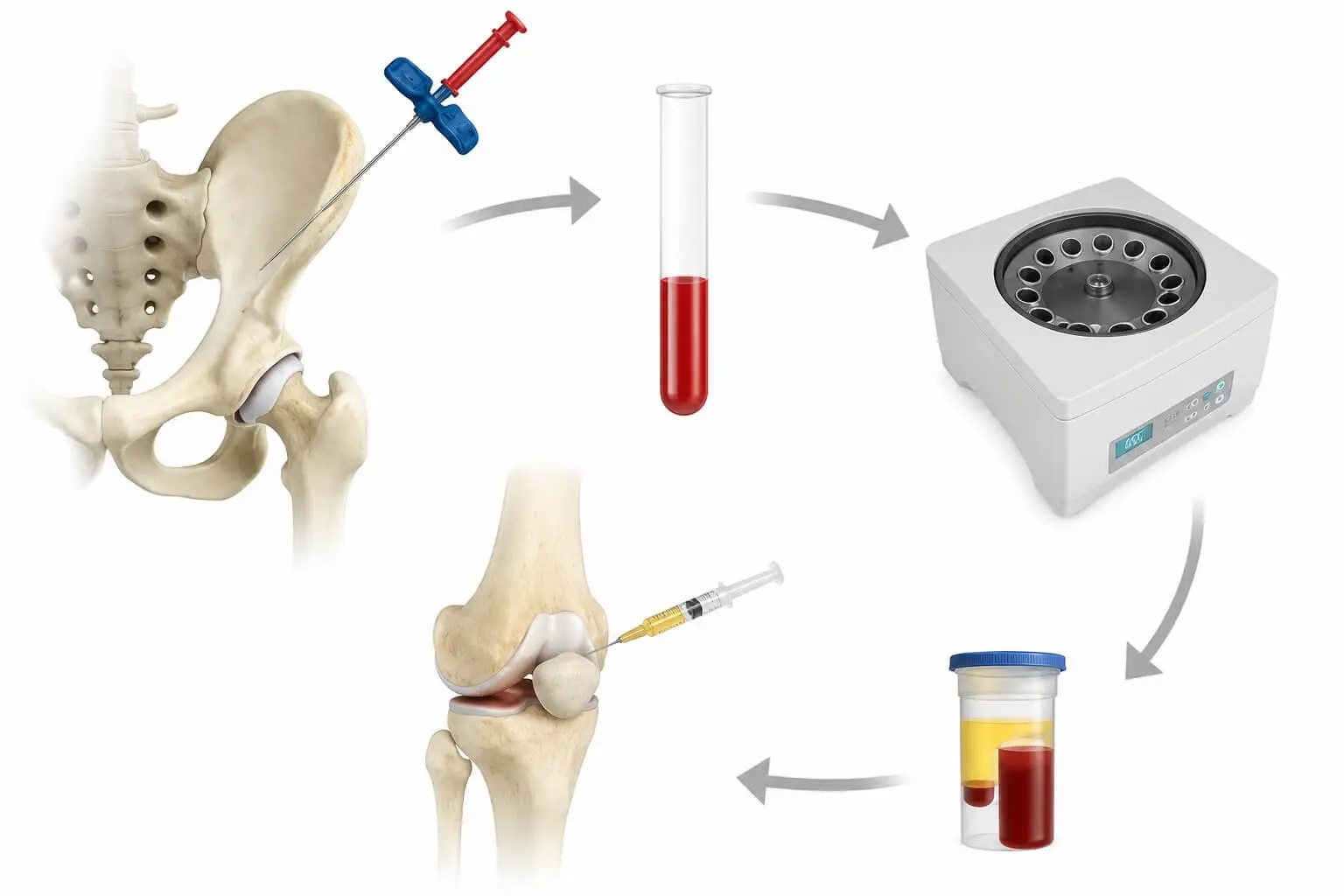
BMC is derived from your own bone marrow, typically harvested from the posterior iliac crest of the pelvis. That raw marrow is then processed through centrifugation to concentrate the components that drive tissue repair, then injected directly into the damaged site.
The centrifugation process increases cell count by 10-13 fold, distinguishing a clinically effective orthobiologic from a diluted injection with limited regenerative potential. What the processed concentrate delivers to your tissue is a multi-component biological product:
Recent studies confirm that stem cells, platelets, proteins, and exosomes in plasma all activate different parts of the healing response. The clinical implication is straightforward: to receive the most complete orthobiologic treatment available, you want all of those components working together, which is exactly what BMC delivers.
BMC contains mesenchymal stem cells derived from your own bone marrow, which is why it is sometimes marketed as stem cell therapy. They are not the same thing. True stem cell therapy typically refers to procedures using donor-sourced or lab-cultured cells. BMC uses only your own cells, processed at the point of care and returned to you the same day. This autologous sourcing eliminates immune rejection risk and is classified differently under U.S. regulatory frameworks.
This distinction matters because not every practice offering “stem cell therapy” is delivering true bone marrow concentrate. Many are using donor-sourced umbilical cord products or exosome injections that are categorized and regulated very differently. BMC procedures use your own marrow, drawn and processed in the procedure room, and injected the same day. That is a fundamentally different clinical product with a separate and more established evidence base.
At Ethos Integrative Medicine in Scottsdale, we use only autologous point-of-care BMC. When we recommend this treatment, what you receive is your own biology, concentrated and returned to you precisely where it is needed.
Not always. PRP is appropriate for many conditions and is typically the right first-line orthobiologic. BMC is indicated when the tissue damage has progressed beyond what platelets and growth factors alone can adequately address. The difference is not quality. It is the biological complexity required to match the injury. For advanced joint degeneration or conditions where PRP has not produced adequate improvement, BMC delivers a substantially broader regenerative product.
BMC and PRP are both autologous, meaning both are derived from your own body. PRP concentrates platelets and growth factors from your blood. It does not provide mesenchymal stem cells. For soft tissue injuries, tendinopathies, and mild to moderate joint degeneration, PRP is frequently the right choice. It has strong evidence, a well-established safety profile, and is less invasive than BMC.
Where BMC differs is in its cellular complexity. For patients with advanced tissue damage, progressive joint degeneration, or conditions that have not responded adequately to PRP, BMC delivers MSCs, hematopoietic progenitors, immune cells, platelets, cytokines, and a plasma scaffold in a single treatment. That is a broader regenerative intervention matched to a more significant injury.
The selection between the two should be based on an accurate diagnosis of the degree and type of tissue damage, not a default preference or the treatment a clinic happens to offer most frequently. This is where our Deep Dive evaluations come in. Our Deep Dive for a Pain Free Knee, Pain Free Shoulder, Pain Free Elbow, Pain Free Hip, and Pain Free Back use our proprietary diagnostic process to get that diagnosis right before any treatment decision is made.
The table below is a quick reference to help orient the conversation. Treatment selection at Ethos is always based on a comprehensive diagnostic evaluation, not a default preference.
| Cortisone | Physical Therapy | PRP | BMC | |
|---|---|---|---|---|
| What it does | Suppresses inflammation temporarily | Restores movement, strength, and mechanics | Delivers growth factors to stimulate healing | Delivers stem cells, growth factors, cytokines, and platelets to drive structural repair |
| Repairs tissue? | No | Indirectly, through loading and movement | Yes, moderate | Yes, most comprehensive |
| Best for | Short-term symptom relief, diagnostic confirmation | Mild to moderate injuries, post-procedure recovery | Soft tissue injuries, mild to moderate joint degeneration | Advanced degeneration, failed PRP, complex orthopedic presentations |
| Limitations | Fades within weeks to months. Repeated use can degrade tissue. | Does not address structural damage directly | No stem cells. Less suited to advanced damage. | More invasive than PRP. Higher cost. Not appropriate for end-stage disease. |
| Durability | Weeks to months | Variable, depends on ongoing adherence | 6 months to 2 years in well-selected patients | Multiple years. Studies show 8 to 15 years in well-selected patients. |
| Avoids surgery? | No. Manages symptoms only. | Sometimes, for appropriate presentations | Often, for appropriate presentations | Frequently, including in patients who have been told surgery is the only option |
If you have completed physical therapy, received injections, or have been told surgery is your next step, a regenerative medicine evaluation can determine whether bone marrow concentrate is appropriate for your presentation.
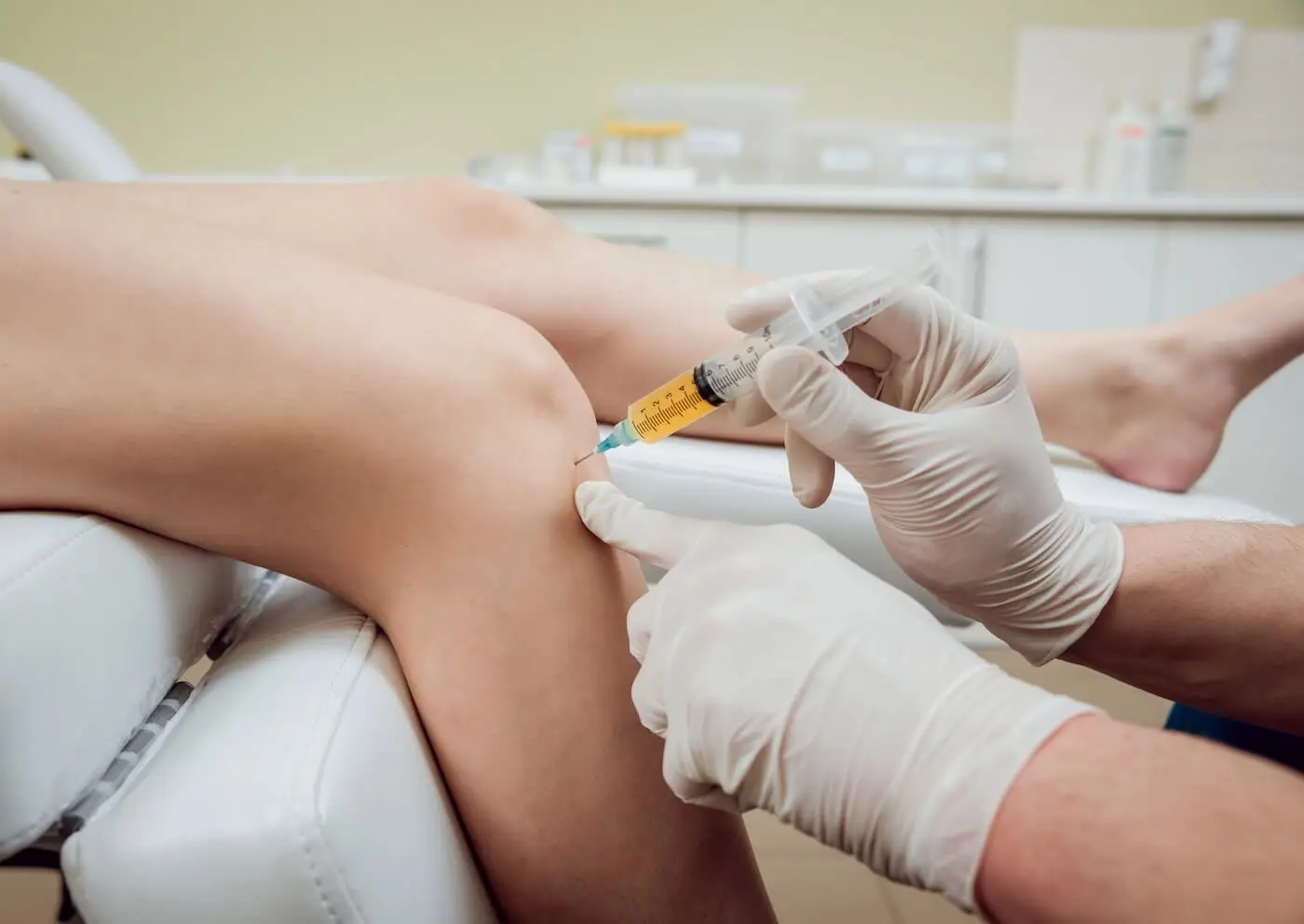
The BMC procedure is completed in a single visit in three steps: bone marrow is aspirated from the posterior iliac crest under local anesthesia, centrifuged in the procedure room to concentrate the therapeutic components, then injected into the target tissue under ultrasound or fluoroscopic guidance. The entire process takes 60 to 90 minutes. Most patients are mobile the same day.
When a patient undergoes a BMC procedure at Ethos, they can expect three stages during a single visit. First, bone marrow is aspirated from the posterior iliac crest under local anesthesia. While the procedure is tolerable, medication is available to improve comfort where needed. Second, the aspirate is centrifuged in the procedure room to isolate the buffy coat layer, which contains stem and progenitor cells. Third, the concentrate is injected into the target tissue under ultrasound or fluoroscopic guidance to ensure precise delivery.
The entire process takes approximately 60 to 90 minutes. Most patients experience soreness and swelling for a few days. Light daily activities are typically possible within 24 hours. Heavy exercise is reintroduced based on the injury and healing trajectory, usually beginning around 4-6 weeks. In our experience, resuming physical therapy within the first week after injection consistently improves outcomes.
Initial relief can appear as early as four weeks post-injection, though the deeper tissue-repair response typically emerges between six weeks and three months. It is important to understand that BMC continues to stimulate a healing response for up to one year post-procedure. The results build over time rather than arriving all at once.
One common misconception worth addressing: some patients believe BMC treatments are not available in the United States. This is incorrect. Bone marrow concentrate is classified as a minimally manipulated autologous tissue product under U.S. regulatory frameworks, which allows same-day, point-of-care processing and injection without involving external cell manufacturing. You are receiving your own biology, concentrated and returned to you.
The clinical evidence for BMC is more substantial than most patients expect, and it is important to understand it honestly rather than through the lens of marketing claims.
For knee osteoarthritis, the most common BMC indication, a 2024 prospective study published in Scientific Reports (Nature Portfolio) followed 37 knees with Kellgren-Lawrence Grade III to IV osteoarthritis for 4 years after a single intra-articular BMAC injection. The study reported a 95% measurable success rate. IKDC scores improved from 56 to 73. WOMAC scores improved from 40 to 18. Both outcomes were sustained at four-year follow-up. These are not short-term pain relief numbers. They represent durable structural and functional recovery in patients with advanced joint disease.
A separate systematic review of 8 studies encompassing 299 knees found that 94.4% of all patient-reported outcome measures showed statistically significant improvement after BMC injections for knee osteoarthritis. Research by Dr. Philippe Hernigou suggests that a single BMC treatment can provide 15 years of pain relief in patients with knee osteoarthritis, though this reflects outcomes in well-selected patients with appropriate diagnosis and image-guided technique.
Clinical reviews have rated BMC’s evidence level for knee osteoarthritis as Level II, based on prospective comparative trials and randomized controlled studies. That is the highest evidence level among all BMC indications currently reviewed.
Research by Dr. Don Buford found that 80% of patients who received BMC treatment for partial-thickness rotator cuff tears experienced improved pain relief and function for 8 or more years after a single treatment and avoided shoulder surgery. Partial rotator cuff tears represent one of the most clinically underserved populations in conventional orthopedics. They sit in a frustrating middle ground: not severe enough to clearly warrant surgery, but not resolving with physical therapy. BMC addresses that gap directly.
The Cleveland Clinic lists BMC’s clinical applications across muscles, bones, cartilage, tendons, ligaments, sports injuries, chronic wounds, degenerative arthritis, and degenerative disc disease. In regenerative orthopedic practice, the most commonly treated conditions beyond the knee and shoulder include hip osteoarthritis, patellar tendon injuries, Achilles tendon pathology, degenerative disc disease, and focal cartilage defects.
Ideal candidates have a confirmed musculoskeletal diagnosis with mild to advanced structural damage, have completed at least one appropriate course of conservative care without adequate resolution, and are not yet at the end-stage threshold where joint replacement is clearly indicated. They have tissue that is damaged but not destroyed. BMC works by amplifying the body’s repair mechanisms, which means there needs to be enough viable tissue to work with.
The patients who benefit most from BMC at our Scottsdale practice are those who have been experiencing pain that limits their activity for longer than three months, have already exhausted conservative management, and want to avoid surgery. They have done the physical therapy, taken the anti-inflammatories, tried cortisone injections, and still cannot get back to full function. BMC is the clinical option that sits between failed conservative care and a surgery they are not ready to accept.
Active adults throughout Scottsdale, North Scottsdale, Paradise Valley, Fountain Hills, and Cave Creek come to us having been told that surgery is their only remaining option. In many of those cases, it is not. But the honest answer requires an evaluation, not an assumption.
Can BMC help avoid surgery? For many patients, yes. We regularly see patients who have received surgical recommendations for knee, shoulder, or hip conditions, pursue BMC instead, and return to full activity without operating. Whether surgery can be avoided depends on the diagnosis, the stage of tissue damage, and the quality of the evaluation preceding treatment.
BMC is not appropriate for everyone. Poor candidacy factors include:
We will tell you directly at the evaluation if you fall into one of these categories rather than recommending a treatment unlikely to produce the outcome you need.
Two variables determine whether BMC produces durable results or temporary relief: an accurate diagnosis and correct treatment execution.
The patients who have tried regenerative medicine at another practice and seen no improvement almost always fall into one of two categories. Either the diagnosis was incomplete and the treatment targeted the wrong tissue. Or the diagnosis was correct but the delivery was imprecise. You can apply the most advanced orthobiologic available to the wrong anatomical target and the outcome will be the same as every treatment that came before it: temporary relief, or none at all.
At Ethos Integrative Medicine in Scottsdale, the diagnostic workup comes before treatment is even considered. The evaluation includes a comprehensive assessment, physical examination, musculoskeletal ultrasound, and detailed pain mapping to identify the tissue generating the pain. The goal is not just to identify where you hurt. It is to understand the full chain of events that produced the injury, because that is the only foundation on which a lasting result can be built.
For precise delivery, we use image guidance for all injections. Not all providers offering bone marrow concentrate use ultrasound or fluoroscopic guidance. Without it, the precise placement on which the clinical trials are built cannot be replicated. All the evidence supporting BMC was performed with image guidance. We consider it non-negotiable.
We also use Databiologics to track patient outcomes and benchmark our results against other top regenerative medicine practices in the United States. We share these results with our patients to ensure full transparency into their progress.
There are regenerative medicine providers offering BMC across the Scottsdale metro. Patients who come to Ethos and stay consistently describe the same difference: a level of diagnostic precision and clinical investment they did not find elsewhere.
BMC procedures in the United States are almost entirely self-pay. Most insurance plans and Medicare still classify BMAC as investigational for orthopedic indications, meaning the cost is borne entirely by the patient despite the clinical evidence supporting the treatment.
The investment reflects several variables: specialized equipment required for processing, the physician expertise required for both aspiration and image-guided injection, and the clinical oversight of the protocol. HSA and FSA funds are generally eligible.
For the patient who has been spending months in physical therapy, paying for repeated cortisone injections, and losing productive time to pain and limitation, the framing that matters is not the upfront cost of BMC versus another injection. It is the cost of continued ineffective treatment versus a non-surgical option with a strong long-term evidence base.
Not every practice offering stem cell therapy is delivering true bone marrow concentrate. That distinction matters clinically and financially. Before committing to a provider, confirm three things:
A provider who is confident in their protocol can answer those three questions without hesitation.
If you have done the physical therapy, tried the injections, and been pointed toward surgery, you have not yet had the conversation that determines whether bone marrow concentrate is the right path for your specific injury. That is what the evaluation is for.
Book a Discovery Call at ethosscottsdale.com or call 480-618-7545. We will give you a clear answer.
How concentrated is BMC compared to raw bone marrow?
The centrifugation process increases the total nucleated cell count by 10-13 times compared to the raw aspirate. The processed product is approximately six times richer in cells and growth factors than the original draw. This concentration is what distinguishes a clinically meaningful orthobiologic from a low-dose injection with limited regenerative potential.
Who is not a candidate for bone marrow concentrate?
BMC is not appropriate for patients with end-stage joint disease where insufficient tissue remains for regenerative medicine to work with, complete structural tears requiring surgical repair, active cancer, uncontrolled systemic conditions, or bone-on-bone presentations where joint replacement is clearly indicated. The evaluation at Ethos is designed to identify these scenarios directly so you have an honest answer before any treatment commitment.
Is bone marrow concentrate considered stem cell therapy?
BMC contains mesenchymal stem cells derived from your own bone marrow, which is why it is sometimes described as stem cell therapy. However, true stem cell therapy typically refers to procedures using donor-sourced or lab-cultured cells. BMC uses only your own cells, processed at the point of care and returned to you the same day. This autologous sourcing eliminates immune rejection risk and is regulated differently under U.S. frameworks.
Can bone marrow concentrate help bone-on-bone arthritis?
Generally, no. Bone-on-bone presentations, where cartilage has degraded entirely, leave insufficient tissue for regenerative medicine to work with. BMC works by amplifying the body’s natural repair mechanisms. If there is no viable tissue remaining, the biology has nothing to build on. For true bone-on-bone arthritis, joint replacement is typically the more appropriate clinical path. We will tell you that directly if your evaluation shows this.
How long do results from bone marrow concentrate last?
For well-selected patients with accurate diagnosis and image-guided delivery, the durability is significant. For knee osteoarthritis, research by Dr. Philippe Hernigou suggests a single BMC treatment can provide 15 or more years of pain relief. For partial rotator cuff tears, Dr. Don Buford’s research found 80% of patients maintained improved pain and function for 8 or more years. Results reflect patients who received proper diagnosis, appropriate candidacy evaluation, and image-guided injection.
What is the success rate of bone marrow concentrate?
A systematic review of 8 studies covering 299 knees found that 94.4% of all patient-reported outcome measures showed statistically significant improvement after BMC for knee osteoarthritis. A 2024 prospective study reported a 95% measurable success rate at four-year follow-up for Kellgren-Lawrence Grade III-IV knees. Success rates vary by condition, stage of disease, and the quality of diagnosis and technique. These figures reflect well-selected candidates treated with image-guided precision.
Does insurance cover bone marrow concentrate?
No. Most U.S. insurance plans and Medicare classify BMAC as investigational for orthopedic indications. All BMC procedures at Ethos are self-pay. HSA and FSA funds are generally eligible. We discuss fees transparently before you commit to any treatment.
Is bone marrow concentrate FDA approved?
BMC is classified as a minimally manipulated autologous tissue product under U.S. regulatory frameworks, which allows same-day point-of-care processing and injection without external cell manufacturing. It is not FDA-approved in the way a pharmaceutical drug would be, but it is legally performed in the United States and does not require FDA approval under current regulatory classification. This is distinct from donor-sourced stem cell products, which face stricter regulatory scrutiny.

Aug 28, 2026
Jul 30, 2026

Nov 10, 2023

Sep 10, 2026
Aug 28, 2026
Jul 30, 2026
Feb 17, 2026