What is the cause of wrist pain?
Feb 17, 2026

It’s frustrating when pain keeps you from your favorite activities, so most people opt to simply “push through” it so they can keep up their workout routine. But the sad fact is this can often lead to more damage and longer recovery time.
Knee and ankle pain are two of the most common complaints among active people. These joints take the brunt of the impact when we’re on our feet and so they are susceptible to significant wear and tear. There are other things that can give you trouble with these two joints, though. In this article we’ll take a look at some typical causes of knee and ankle pain, how to distinguish between soreness and an injury, and the different things your doctor can do to help get you back in action.
Knee pain is one of the most common injuries for athletes, outside of the shoulder and lower back. Ankle pain is among the top complaints as well, but overall tends to affect less people than knee issues.
Injuries in the knee and ankle are typically a result of problems with the hip. Unless you took a direct hit to the knee or ankle, it’s important for doctors to check if you have any wear and tear in the hip that’s leading your other joints to overcompensate. They might do this if your hip has trouble with mobility or strength, so assessing that area is key to properly diagnosing knee and ankle pain.
Ankle pain is also typically associated with hip issues. You might have trouble with your ankles if you have an uneven gait or limited hip strength. Another potential cause of ankle pain is chronic sprains. If you have weak or overstretched ligaments in your ankle, then you might notice instability and be more likely to twist or sprain it.
There are, of course, countless causes for joint pain and you should always consult your doctor for a proper diagnosis. But when it comes to knee and ankle pain specifically, it’s important to look at the health of your hip as well.

Sometimes it can be hard to tell if the pain you’re feeling is something to be worried about or just your body recovering from a tough workout. There are a few ways you can assess your pain to determine if it’s time to see a doctor or just take it easy for a couple of days.
You should only feel soreness in your muscles, not your joints. After a hard workout where you push your body, your muscles are likely to be fatigued and need rest. Your joints, however, should still feel strong and stable.
Additionally, soreness should only be noticed when you’re using your muscles. For example, if you did a tough ab circuit, you might feel some pain in your stomach muscles when you get up from your bed or from the couch the next day.
An injury feels a little bit different. The most obvious sign is if you still feel pain when you’re sitting still or lying down at night. If you notice pain even when you aren’t engaging that joint or the muscles around it, that’s a sign you have some damage causing a problem.
Another injury indicator is swelling. Swelling is how the body protects and heals its joints by sending blood to a damaged area. If you have swelling around your knee or ankle, your body is telling you there’s some type of injury that needs to be addressed.
Lastly, finding comfortable positions are often difficult when you have a joint injury. When you’re experiencing knee pain due to damage, it might feel impossible to find a comfortable position in your bed or on your couch. With ankles, you might find some relief by propping up your ankle or sleeping on your back to keep your foot aligned with your leg, but the slightest movements could provoke pain. If you’re experiencing trouble getting comfortable or need specific positions to relieve pain, that’s a sign of injury.

When it comes to injuries, you’ll probably get mixed advice from everyone you know. Although they all mean well, following the wrong protocols could actually make your injury worse. So it’s equally important to know what not to do when you have knee and ankle pain.
If you’re older than 45 and have knee pain, most doctors will immediately call it osteoarthritis and order cortisone injections. The problem is there are lots of other things that could be causing your pain. And even if it is arthritis, cortisone shots can actually make the condition worse because it breaks down cartilage in your joints.
Few doctors pay attention to ligaments in the knee when you complain of pain. Instead of letting your doctor convince you to wait for your problems to get worse so you can have a knee replacement, ask them to look at your MCL, LCL, and other ligaments and tendons in your knee. They just might find the real culprit for your pain.
The most common advice for managing ankle pain is to ice the joint. The problem is that this can actually make your situation worse. If your pain is from damage to the ligament, then icing it too much can actually stop it from healing.
Few doctors assess the muscle and ligament strength around the ankle. Instead, they’ll use a cortisone injection to manage pain and send you on your way. Or they might recommend orthotics to help your stability. Orthotics can actually make your ankle weaker, though, because it stops engaging those muscles that need to be strengthened.
Ultimately, your best route is to have your doctor assess your hip health to determine what’s wrong with your ankle. Many ankle injuries stem from a root problem in the hip, and if you can find it, you can better treat your ankle pain.
As an athlete myself, I know how hard it is to take a day off. But sometimes that’s really what your body needs. Here are a few examples of how your body tells you it’s time to slow down:
When you’re battling an injury in your workout routine, go for quality over quantity. Depending on the severity of your situation, you might be able to keep doing a pared down version of your normal exercise. Just focus on performing only as much as you can do correctly, and stop when you notice trouble keeping your form and movement steady.
If you do notice some of these signs during your workout, there are a few different ways your doctor might diagnose the issue.

When you complain of knee or ankle pain, most doctors will take an X-Ray first. This gives them a good picture of what’s happening in the joint and allows them to see if there’s any damage to the bones. For knee pain, they’ll often order an MRI as well to get a better picture of the ligaments and muscles surrounding that joint.
Some doctors will stop at an X-Ray when diagnosing ankle pain, but this isn’t the only test that can be run. At Ethos Integrative Medicine, we also take ultrasounds of ankle injuries to determine if there is any damage to the ligaments surrounding the joint. This helps us make a proper diagnosis and create a more targeted treatment plan.
There are some low tech tests your doctor can perform on the spot, too. One is to measure the flexion and extension of your knee or ankle to see if it’s within normal range. If either is limited, that’s a good indicator that you either have tight muscles around that joint or damage within it. Another test is to single leg balance and rate how strong you feel. If you don’t feel like your single leg is fully stable, then you likely have an issue in one of your joints.
Lastly, an easy way to determine if you have an injury to your ankle is to mention how strong it feels when walking. For example, if you’re likely to roll or sprain your ankle when you step on a small pebble or haphazardly off a curb, then you probably have an issue with the ligaments surrounding that joint.
Figuring out what’s causing your pain is the first step in resolving it. But what are you supposed to do about it in the meantime?

There will likely be some lag time between your diagnosis and first treatment session. To keep yourself from spending this entire period in pain, there are a few ways you can help manage it until you see your doctor again.
These few tricks can help you bide your time until you start the treatment that’s best for you. There are many different therapies available to help you heal your joints, so let’s look at a few options.
The right type of therapy will depend on what’s causing your issue—a sprained ligament, meniscus problem, osteoarthritis, etc. All of these causes require different therapies to heal the underlying problem the right way.
For ankle pain, we typically use prolotherapy. This is an injection that encourages your body’s natural healing process in the injured area. We use this therapy because ankle injuries are typically caused by damage to the ATFL, a ligament that runs alongside your ankle. Prolotherapy helps your body to heal the ligament so you can start building on strength and mobility again. It also helps with similar issues in the knee.
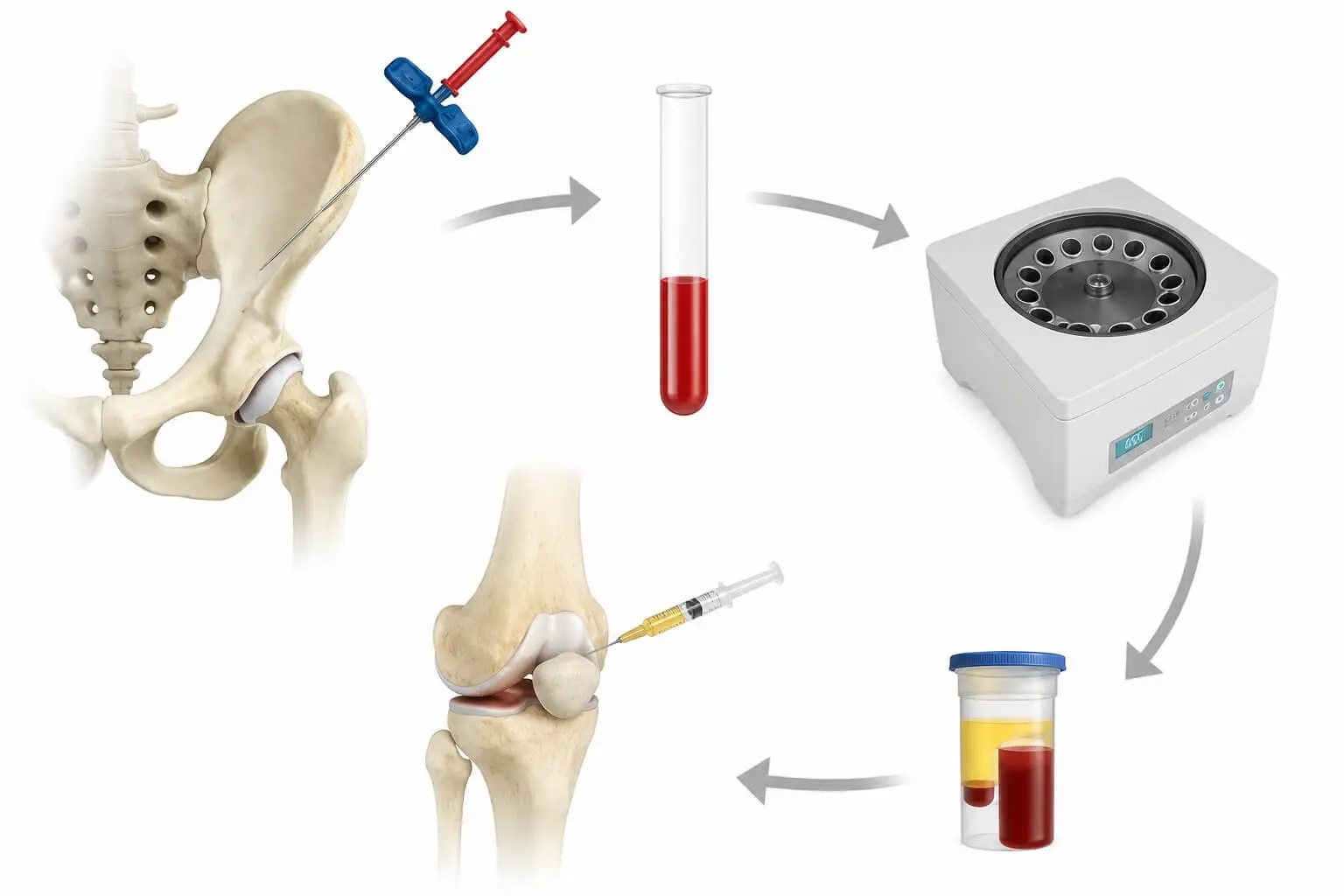
Another treatment we often use is non-surgical injections. These are beneficial for people with osteoarthritis and tendon damage around their ankles and knees. It works similarly to prolotherapy by stimulating the body’s healing process, but has the added benefit of using plasma to increase healing in those important tissues.
As you undergo therapies or others, it’s important to continually work on improving your strength and mobility in all three joints in your legs: hip, knee, and ankle. You can use banded stretches or distraction stretches to help lengthen your muscles and increase your range of motion in the joints.
If you’re experiencing knee and ankle pain and aren’t sure what to do, it’s time to see a doctor. Your doctor can help you diagnose what’s causing your pain and create a treatment plan to address it. They’ll help you build up your strength and mobility to get back on your feet and be better than ever!
At Ethos Integrative Medicine, we take a holistic approach to healing joint injuries. With injection therapy, non-surgical therapy, and informed testing methods, we target the precise damage that’s causing your pain. Schedule a phone consultation today to learn how we can help you feel better and get stronger.

Dec 4, 2025

Oct 10, 2025

Sep 24, 2025

Sep 10, 2026

Aug 28, 2026

Jul 30, 2026

Jul 15, 2026
Feb 17, 2026