TRT Clinic vs. Comprehensive Hormone Optimization
Aug 28, 2026
I get some version of this question almost every week. A patient sits across from me with an MRI in hand, and a surgeon has already told them what their options are. Scope the shoulder, replace the knee, repair the labrum. What they are actually looking for is a version of that conversation where surgery is not the only door in the room.
Surgery is a significant commitment, and many high-performing men and women are asking whether there’s a more strategic option. Bone marrow aspirate concentrate (BMAC) has emerged as a precision, non-surgical alternative for joint pain, arthritis, and orthopedic injuries that once had few options outside the operating room.
Here is what the data actually shows, and just as important, what it does not show.
Regenerative orthopedics has shifted the conversation around musculoskeletal care. For patients facing knee replacement, rotator cuff repair, or labral repair, the default path to feeling better is no longer just a surgical one.
BMAC is an orthobiologic treatment drawn from your own body. It concentrates the mesenchymal stem cells, growth factors, and anti-inflammatory cytokines your tissue needs to repair itself, then delivers them precisely where damage has occurred.
There is now enough evidence on BMAC to help you decide whether it can help you avoid surgery. Understanding both sides is what separates a data-driven health strategy from wishful thinking.
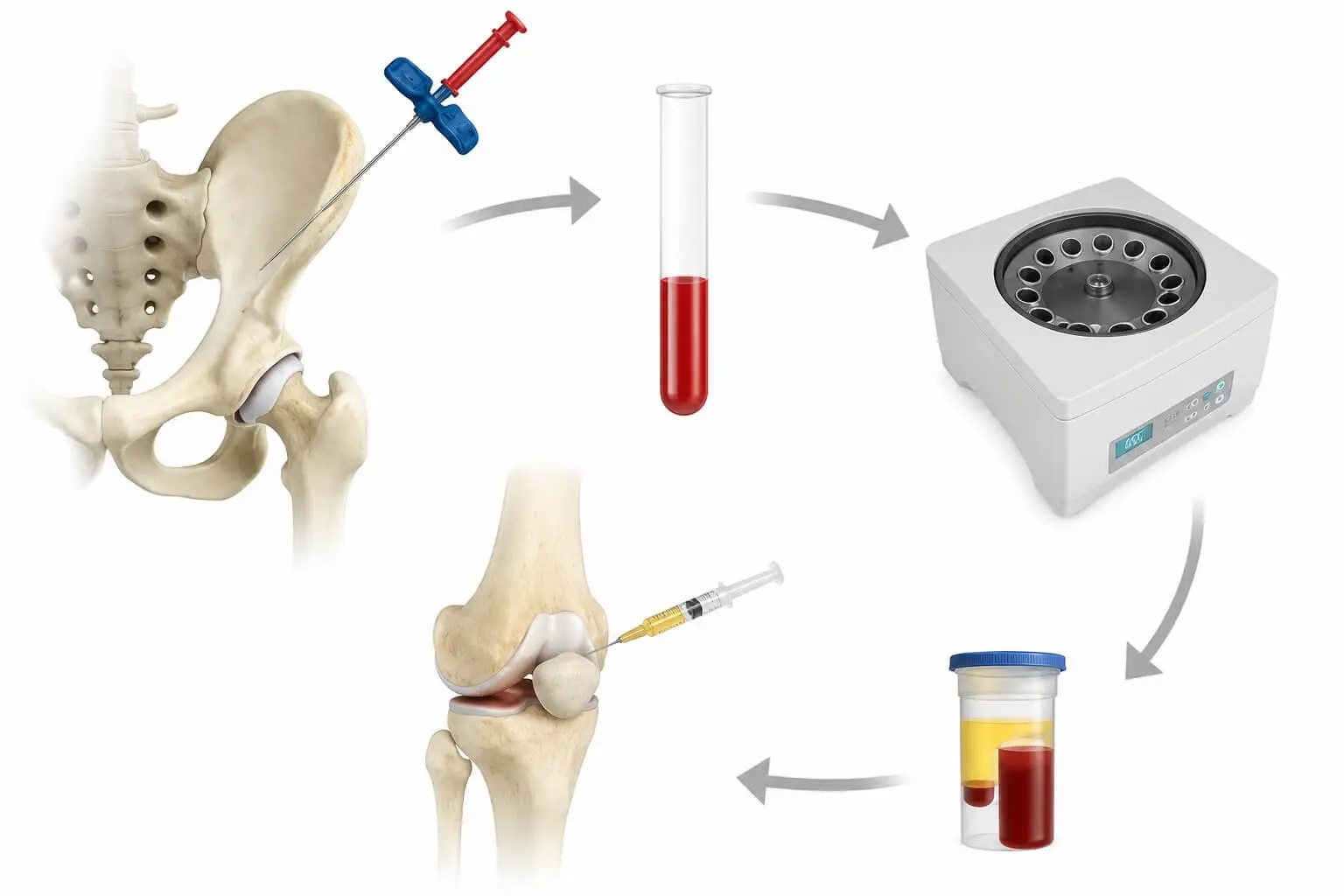
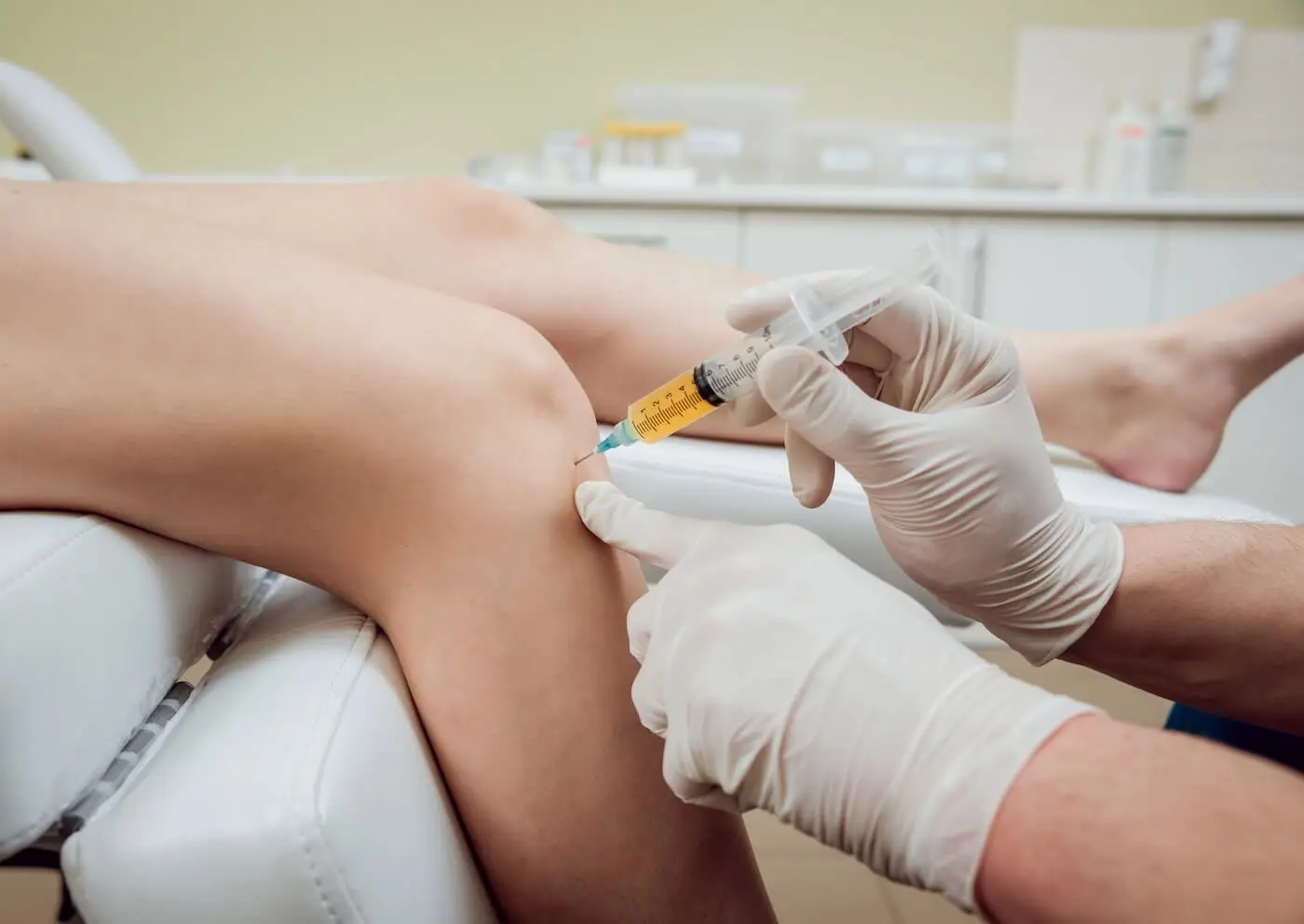
BMAC is an autologous, minimally invasive injectable therapy. It is prepared by aspirating bone marrow from the iliac crest, then centrifuging it to concentrate the regenerative components before injection into a damaged joint, tendon, or disc.
What Is Bone Marrow Concentrate (BMAC)? BMAC is an autologous, minimally invasive injection therapy made by concentrating mesenchymal stem cells, growth factors, and anti-inflammatory cytokines from your own bone marrow, then delivering them into a damaged joint, tendon, or disc to support the body’s own repair process.

Key components include:
According to Cleveland Clinic, the FDA classifies BMAC as “minimally manipulated autologous tissue,” permissible in clinical practice.
BMAC does not rebuild your joint from scratch. That is not the mechanism, and I want to be direct about that up front, because overselling this treatment is exactly what has made patients rightly skeptical of regenerative medicine in the first place. BMAC does not simply replace damaged tissue; it creates the biological conditions for your body to repair itself. Let’s take a closer look at how that mechanism actually works.
How does BMAC reduce the need for knee replacement? BMAC delivers mesenchymal stem cells, growth factors, and anti-inflammatory cytokines directly into damaged joint tissue, creating conditions for the body to repair itself and slow degeneration. Delivery technique is a key clinical variable: studies show subchondral BMAC injection produced meaningfully better long-term surgery-avoidance rates than intra-articular injection alone.
While most people think that BMAC works through stem cells directly turning into the neighboring tissue, its mechanism is through cell signaling and immunomodulation. According to ASIPP, MSCs secrete growth factors and cytokines that reduce pro-inflammatory enzymes, promote anabolic matrix synthesis, and recruit native progenitor cells. This creates a pro-regenerative environment at the site of injury.
The best clinical outcomes correlate with higher MSC content in the concentrate, per PMC research. The dose of live stem cells matters. A higher-quality aspirate, processed with precision, produces better results.
BMAC is a same-day outpatient procedure. Bone marrow is aspirated from the posterior iliac crest under local anesthesia. The sample is spun in a centrifuge to concentrate the regenerative components. The resulting concentrate is then injected into the target site under ultrasound or fluoroscopic imaging guidance for accuracy.
The entire process typically takes one to two hours. Patients return to sedentary activity within one to seven days, with activity restrictions commonly lasting one to two weeks depending on the treated area.
Expected Outcomes
A 2025 peer-reviewed article confirmed that BMAC can support subchondral bone remodeling, enhance chondrocyte survival, and modestly improve or stabilize cartilage thickness in some imaging studies, per Springer. As noted above, this is about symptom relief and functional improvement, not full structural regeneration of severely destroyed joints. You can still have areas of damage without the pain that goes with it.
Improvement is typically reported at two to eight weeks post-injection. Continued gains occur over three to six months, with benefits in multiple studies lasting one to four or more years.
The clinical case for BMAC as a surgery-avoidance strategy is built on multi-year outcome data across several conditions. The results are specific and worth examining directly.
Key findings from peer-reviewed research include:
Here is how BMAC and surgery compare at a glance:
| Factor | BMAC | Surgery |
|---|---|---|
| Invasiveness | Same-day, outpatient injection | Operating room, anesthesia |
| Recovery | 1 to 7 days | Weeks to months |
| Complication rate | Approximately 5.3% (knee OA study) | Varies by procedure, generally higher |
| Insurance coverage | Rarely covered | Typically covered |
| Best for | Moderate to advanced damage, before end-stage | End-stage structural failure, instability |
Wondering if you’re a candidate for this kind of outcome? A Joint Pain Deep Dive evaluates your imaging and clinical presentation to tell you honestly whether BMAC is a fit, or whether surgery is still the right call. Book a Discovery Call to find out.
A clinical series using BMAC combined with PRP for arthritis found that 84% of patients had significant improvements in pain and function within six months. Authors concluded the protocol could be effective in avoiding surgery for many patients, per outcomes data.
Pain relief from BMAC is not simply symptomatic masking. The mechanism targets the inflammatory cascade driving joint deterioration. For high-performing patients who need to stay active and functional, that distinction matters. A treatment that reduces the source of pain while supporting tissue recovery is a different category of care than a cortisone injection.
Those numbers matter to me for a specific reason. Cortisone reduces pain by suppressing inflammation; it does not address the underlying degeneration, and in most cases actually accelerates it. BMAC targets the actual inflammatory cascade driving the joint’s breakdown. That is a different category of intervention than symptom management, and it is why the outcomes hold up over years instead of weeks.
BMAC is not without risk, and precision care demands honest accounting of the data. Patients and physicians should weigh the following:
Patients often want to know whether their specific injury falls into a category where BMAC has a realistic chance of helping them avoid surgery. Based on the data above, here are the four conditions where that case is strongest.
Knee osteoarthritis at Kellgren-Lawrence grades III to IV has the deepest evidence base of any condition discussed here, including multi-year data showing meaningfully reduced rates of total knee arthroplasty.
Partial-thickness rotator cuff tears, in particular, have shown strong surgery-avoidance rates over long-term follow-up.
Hip labral tears augmented with BMAC have shown functional improvements that persist for years beyond what labral repair alone typically achieves.

Cervical disc disease is a less commonly discussed application, but outcome data on reoperation rates and functional improvement compares favorably to surgical fusion in appropriately selected patients.
The evidence supporting BMAC as a non-surgical strategy has grown substantially, and for the right patient, it can meaningfully reduce the likelihood of surgery. But right patient is the key phrase. End-stage joint destruction, certain contraindications, and cases without adequate imaging support still point toward surgery, and no article, including this one, should be the thing that makes that call for you.
That is exactly why we do not start with a treatment recommendation at Ethos. We start with a Joint Pain Deep Dive.
Your evaluation includes a review of your existing imaging, a physical exam of the affected joint, and a direct conversation about what the evidence does and does not support for your specific case. If you do not have recent imaging, we will help determine what is needed before any treatment decision is made.
How much does bone marrow concentrate cost in the United States?
Published clinic pricing in the United States typically ranges from $5,000 to $10,000 per procedure, consistent with the range cited in our companion article comparing BMAC to PRP. Insurance rarely covers the cost, since most insurers, including Medicare, classify BMAC as investigational for musculoskeletal conditions, making this an out-of-pocket investment.
Is bone marrow concentrate available across the United States?
BMAC is offered at regenerative orthopedics practices across the United States, with concentration in major metropolitan areas and specialty sports medicine clinics. Availability varies by region, and protocol quality differs significantly between providers, which is worth evaluating directly with any practice you’re considering.
How long do bone marrow concentrate results last?
Multiple studies show benefits lasting several years, with sustained improvements in pain and function. The longest study to date shows patients were able to avoid total knee replacement 15 years after treatment, with the study still ongoing. Results generally last longer than PRP for many patients. The 2025 JBJS five-year follow-up of hip labral repair patients with BMAC augmentation found functional improvements persisting to 60 months, suggesting durable outcomes are achievable with appropriate patient selection and delivery technique. One of the most important variables for lasting results is correcting the underlying biomechanics that caused the damage in the first place, not just treating the joint in isolation.
How does bone marrow concentrate compare to PRP?
Both BMAC and platelet-rich plasma (PRP) are orthobiologic treatments derived from your own blood or tissue. BMAC contains a broader regenerative profile, including mesenchymal stem cells, multiple growth factors, and anti-inflammatory cytokines, while PRP concentrates primarily on platelets and growth factors. Outcome studies report significant improvement in the large majority of BMAC patients, reflecting a more comprehensive biological intervention than PRP alone, though Level I randomized controlled trial evidence for BMAC is still developing industry-wide. For a full breakdown of how the two treatments differ and which injuries respond to which, see our companion article on BMAC versus PRP. [Link: Bone Marrow Concentrate vs PRP]
Who is the best candidate for bone marrow concentrate treatment?
Ideal candidates have moderate to severe osteoarthritis, tendon injuries, labral tears, or disc disease that has not responded to conservative care but has not yet progressed to end-stage structural destruction. Patients with significant joint deformity, active infection, blood cancers, or severe structural instability are generally not appropriate candidates, per Cleveland Clinic. A thorough evaluation of imaging and clinical history is the starting point for any strategic decision.
What is a Joint Pain Deep Dive, and how does it decide if I’m a BMAC candidate?
A Joint Pain Deep Dive reviews your existing imaging, includes a physical exam of the affected joint, and results in a direct answer about whether BMAC has a realistic chance of helping you avoid surgery, or whether surgery is genuinely the better path for your specific case. It is built to answer that question honestly, not to sell a particular outcome.
If BMAC doesn’t work, can I still have surgery later?
In almost all cases, yes. BMAC does not close the door on surgery if it doesn’t produce the improvement you were hoping for. This is one of the reasons it’s a reasonable option to try first for the right candidate, since it does not typically compromise a later surgical option the way some other interventions might.
Will my surgeon’s recommendation change if I get a second opinion first?
Sometimes, and sometimes not. A second opinion doesn’t exist to talk you out of a recommendation your surgeon already made in good faith. It exists to confirm whether a non-surgical option was fully considered before that recommendation was made. If the evidence still points to surgery once we’ve looked at your case, we’ll tell you that directly.

Ready to Get a Second Opinion Before You Commit to Surgery?
If a surgeon has told you replacement or repair is your only option, that’s worth a second, data-driven look before you commit. Book a Discovery Call with Ethos Integrative Medicine to start with a Joint Pain Deep Dive and find out if you’re a candidate for a non-surgical path.
By Dr. Matthew Hernandez, NMD, Co-Founder of Ethos Integrative Medicine
Dr. Hernandez performs image-guided BMAC procedures for patients throughout Scottsdale and the Valley. [CONFIRM WITH DR. HERNANDEZ: exact years of experience or case volume to state here before publish, not estimated.] This article reflects his direct clinical approach to evaluating whether surgery or a non-surgical path is the right call.
Aug 28, 2026
Jul 15, 2026

Nov 10, 2023
Sep 28, 2026

Sep 10, 2026
Aug 28, 2026
Jul 15, 2026
Feb 17, 2026