
You have been told surgery is your only option. You have done the cortisone injections. The pain keeps coming back.
Regenerative medicine in Scottsdale offers a different path. One built on your body’s own biology rather than managing symptoms indefinitely.
At Ethos Integrative Medicine in Scottsdale, we built our regenerative orthopedics practice around a specific clinical conviction: that most patients who are told their only options are cortisone and surgery have not been given the full picture. The treatments we offer, PRP, prolotherapy, bone marrow concentrate, and MFAT, are evidence-based, non-surgical, and selected based on your specific clinical presentation. Not applied as a standard protocol to every patient who walks through the door.
This page explains how each treatment works, what conditions respond best, how we choose between them, what the evaluation process looks like, and who is and is not a strong candidate. If you are researching regenerative medicine in Scottsdale and want a clinically honest picture of what it can and cannot do, this is the right place to start.
Regenerative medicine uses your body’s own biological material to stimulate tissue repair at the cellular level. Rather than masking pain or replacing damaged joints with hardware, it targets the injured structure directly, giving the tissue what it needs to heal.
Conventional orthopedic care was built around a binary: manage the pain or operate. For the active, high-performing adults we see across Scottsdale, North Scottsdale, Paradise Valley, and the surrounding areas, neither answer is acceptable.
According to the CDC, 24.3% of U.S. adults had chronic pain in 2023, with 8.5% experiencing high-impact chronic pain that limits daily function. Yet conventional treatments deliver an average of only 30% pain reduction, according to the U.S. Pain Foundation. That is not restoration. That is management.
Regenerative orthopedics works differently. The goal is not symptom suppression. It is structural improvement in the tissue generating the symptoms. The evaluation is what determines whether you are a candidate and which treatment gives you the best clinical path forward.
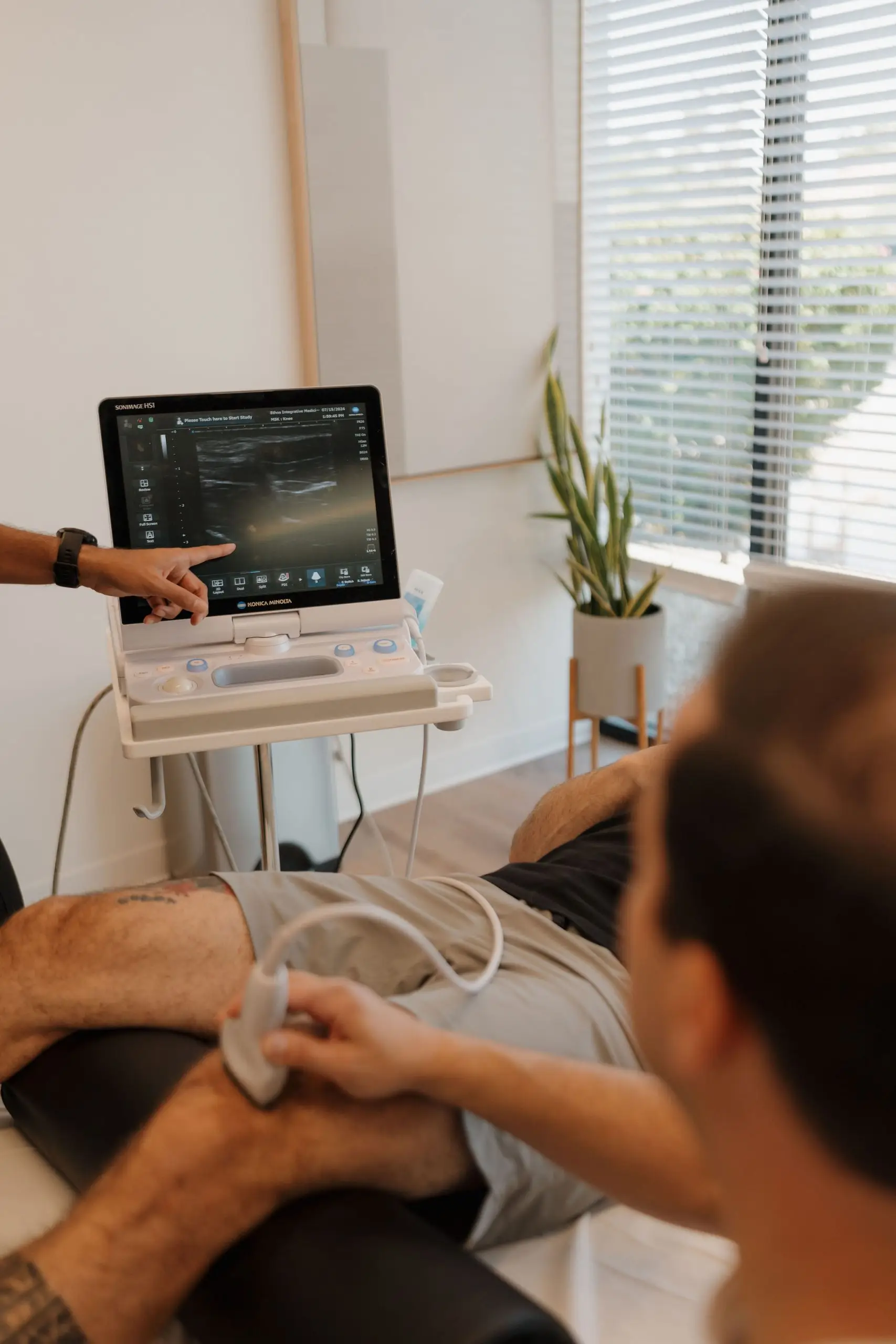
At Ethos, we do not offer a single modality and apply it to everyone. We use the full spectrum of evidence-based orthobiologic treatments, selecting the right tool based on your clinical picture. Every treatment decision is made after a thorough diagnostic evaluation.
PRP Therapy concentrates platelets drawn from your own blood and injects them into damaged tissue to deliver the growth factor signal the tissue needs to repair. It is the most accessible entry point for soft tissue injuries, tendinopathies, and mild to moderate joint degeneration.
Most of the patients who come to us having tried cortisone have noticed the same thing: it works, and then it stops working. That is not a failure of patience. It is a function of what cortisone actually does. It suppresses inflammation. It does not repair tissue. PRP does something different. It delivers concentrated growth factors directly to the damaged structure and signals the tissue to begin repairing itself. The effects build over weeks and months rather than fading, which is why a 2024 comparative meta-analysis of 3,696 patients found PRP delivered significantly better pain outcomes than corticosteroid at six months, with the gap widening over time.
A 2024 meta-analysis of 1,995 patients confirmed clinically meaningful functional improvement at one, three, six, and twelve months for knee osteoarthritis. For the right patient with the right presentation, PRP changes the trajectory of what was otherwise a worsening problem.
Prolotherapy uses targeted injections of a dextrose solution into ligaments and tendons to stimulate the body’s repair response and promote new collagen formation. It is the strongest non-surgical option for chronic joint instability and ligament laxity.
Prolotherapy addresses something that most regenerative medicine conversations skip over: the ligament. A significant portion of chronic joint pain is not driven by cartilage damage. It is driven by laxity in the ligaments that are supposed to stabilize the joint. When those structures are loose or damaged, the joint moves incorrectly under load, and the pain that results does not respond to treatments aimed at cartilage because cartilage is not the problem.
A 2024 meta-analysis found a large pain reduction effect (SMD: -0.95) for knee osteoarthritis. SI joint dysfunction, chronic low back pain, tennis elbow, and plantar fasciitis are all conditions where prolotherapy consistently produces results that other approaches have missed. If you have been treated repeatedly for a joint problem without getting to the bottom of it, ligament instability may be the conversation that has not happened yet.
BMC is a more advanced orthobiologic treatment using concentrated regenerative cells harvested from your own bone marrow. It is indicated for more significant structural damage where PRP alone is unlikely to provide sufficient cellular resources.
For patients whose damage has progressed beyond what PRP can adequately address, BMC brings a richer regenerative environment to the tissue. We use it when the imaging shows moderate to advanced cartilage loss or complex presentations that require more than platelets alone. A systematic review of 4,626 patients found 94.4% of outcomes showed improvement at approximately 13 months.
BMC is not a fallback for patients who did not respond to PRP. It is a distinct clinical tool selected when the injury profile specifically calls for it. For Scottsdale patients with more advanced joint damage who are not yet at the threshold where replacement is clearly indicated, BMC frequently changes what is possible.
MFAT is minimally processed fat tissue harvested via a small procedure and injected into damaged joints. It offers a different biological profile than BMC and is used when that profile better matches the clinical indication.
MFAT is the treatment most patients have not heard of before they come to us, and it is often the one that surprises them most. A 2025 RCT published in Arthroscopy showed MFAT produced consistent, statistically significant improvement in pain scores through one year, while corticosteroid effects had faded by month 12. It is not a second-tier alternative to BMC. It is a distinct biological tool with a different cellular composition, selected when your imaging and clinical picture specifically call for it rather than applied as a default.
This is the question that matters most before any treatment decision. Regenerative medicine is not a universal solution and we do not present it as one. The conditions below are where the clinical evidence is strongest and where we consistently see meaningful outcomes. If you are unsure whether your condition qualifies, that is exactly what the evaluation is for. We will give you a clear, honest answer before any treatment decision is made.

If there is one area where regenerative medicine has proven itself beyond any reasonable clinical doubt, it is the knee. PRP produces clinically meaningful improvement in roughly 50-70% of well-selected patients, with the best results in Kellgren-Lawrence grades 1-3. A 4-year prospective cohort study of MFAT for early knee osteoarthritis found approximately 68% of patients maintained durable improvement at four years.
What that data reflects in practice is this: the active adult in Scottsdale whose knee pain is limiting golf, tennis, hiking, or time with their grandchildren, and who is not yet bone-on-bone, has a genuinely strong case for regenerative treatment before committing to surgery. The window where intervention produces the best durability is earlier than most patients realize.

Partial rotator cuff tears are one of the most frustrating diagnoses in conventional orthopedics. Not severe enough to clearly warrant surgery, but not resolving with physical therapy either. Patients in this middle ground are often told to wait and see, which typically means waiting until the tear progresses to the point where surgery becomes unavoidable.
This is one of the strongest clinical indications for regenerative medicine in our Scottsdale practice. PRP has moderate-to-strong evidence for rotator cuff tendinopathy. Improvements in pain and function typically emerge over 3-6 months and are meaningfully enhanced by structured physical therapy alongside the injection protocol. For the right candidate, the question is not whether to try regenerative medicine before surgery. It is why it was not offered sooner.

If your joint pain has been treated repeatedly without resolution, ligament instability may be the conversation that has not happened yet. Most orthopedic evaluations are focused on cartilage and bone. Prolotherapy is focused on ligaments, and for a meaningful subset of patients with chronic joint pain, that distinction is everything.
A pooled analysis in Nature Scientific Reports found hypertonic dextrose prolotherapy produced a moderate-to-large effect size on WOMAC composite scores at 12-16 weeks versus exercise alone. SI joint dysfunction, chronic low back pain, tennis elbow, and plantar fasciitis are all conditions where prolotherapy produces results that other approaches have consistently missed.

Hip pain from osteoarthritis, labral pathology, and tendon dysfunction responds well to regenerative intervention at the right stage. For active adults across Scottsdale and Paradise Valley who want to avoid hip replacement or are managing persistent post-procedure tendinopathy, PRP and BMC offer meaningful non-surgical options. The same principle applies here as everywhere else in regenerative medicine: earlier intervention produces better long-term durability than waiting until the damage is more advanced.

Chronic low back pain is one of the most over-treated and under-diagnosed conditions in conventional medicine. Epidurals, anti-inflammatories, and physical therapy address the symptoms. They do not always address the cause. For patients in Scottsdale, Fountain Hills, Cave Creek, and North Scottsdale whose back pain has not responded adequately to those approaches, a prolotherapy evaluation frequently reveals underlying ligament instability as the root driver that has been present and unaddressed throughout.
Treatment selection at Ethos is driven by clinical data. The tissue involved, the severity of damage, and your own biology all determine the protocol. We have no financial incentive to recommend any particular modality. The right treatment is determined by what the imaging shows.
The decision framework follows a clear logic:
A 2024 head-to-head comparison found no significant difference in patient-reported outcomes at 12 months between PRP, BMC, and adipose-derived therapies, confirming that individualized patient selection drives results more than any single modality. The right treatment for your injury is determined by what the clinical picture calls for, not by what we happen to offer most frequently.
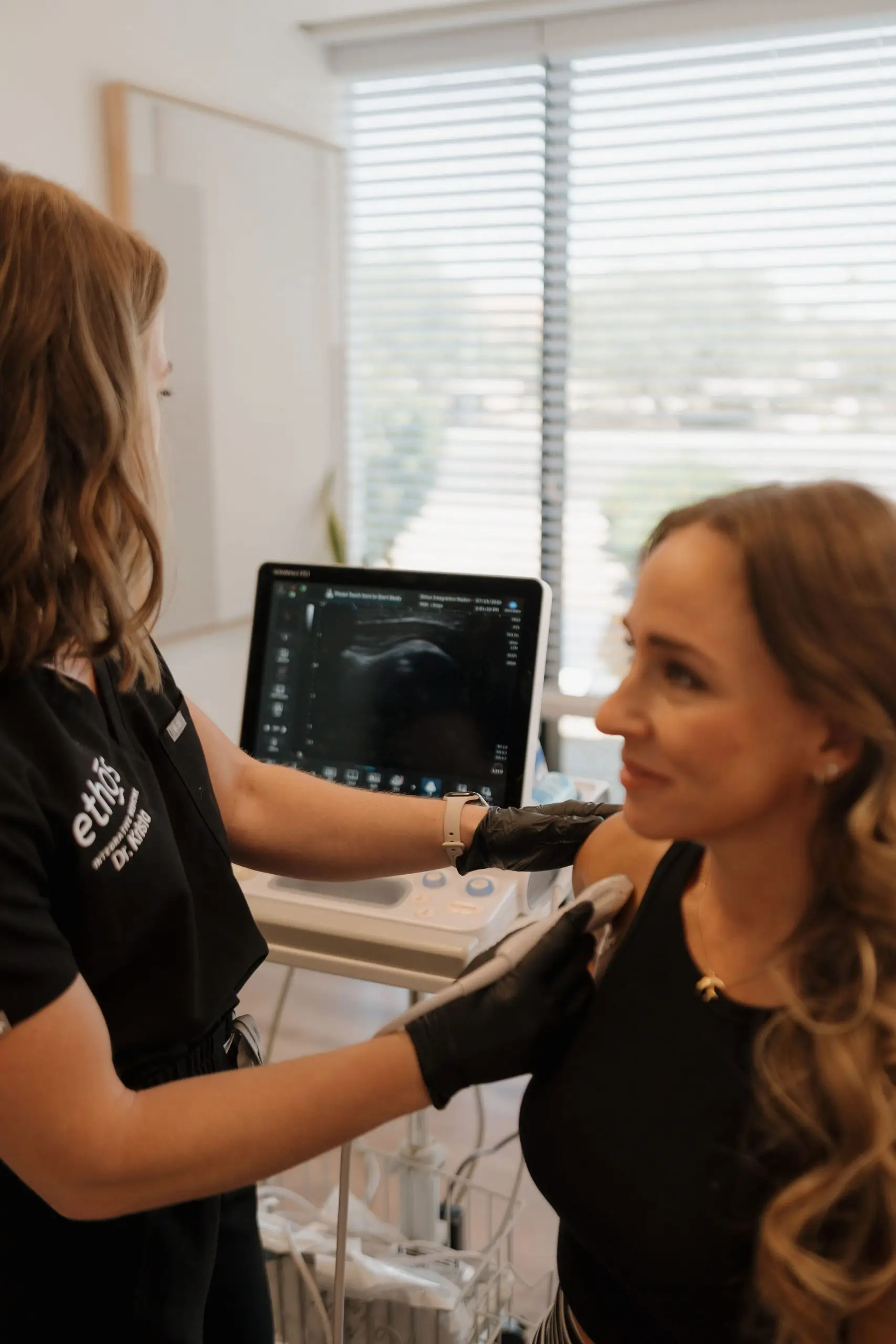
Precision care requires a precise starting point. Every regenerative orthopedics patient at our Scottsdale practice goes through a structured evaluation before any treatment is selected. Nothing is assumed. Nothing is applied by default.
The evaluation begins with a detailed history, physical examination, and imaging review. We use in-office diagnostic musculoskeletal ultrasound to identify the exact pain-generating structure. Ultrasound guidance is standard for all regenerative injections at Ethos. Blinded knee injections miss the joint space in up to 30% of cases, while ultrasound-guided delivery achieves near-100% accuracy. That distinction matters more than most patients realize.
For PRP patients, NSAIDs are paused before the procedure. Anti-inflammatory medications blunt the healing cascade that PRP is designed to trigger. Taking them before or immediately after treatment counteracts the mechanism.
For prolotherapy patients, the protocol is structured around the number of sessions required, typically 3-6 spaced 4-6 weeks apart. Post-procedure, relative rest for 24-48 hours is followed by a structured physical therapy program to maximize the biological effect and retrain movement patterns around the treated structure.
For BMC and MFAT patients, the evaluation includes a thorough assessment of systemic health, metabolic status, and prior treatment response. Outcome tracking using KOOS, WOMAC, VAS pain scale, and Oxford Knee Score is built into the protocol from the start.
The evaluation does not end with a recommendation you are expected to accept without question. It ends with a clear explanation of what we see in your imaging, what treatment we believe is appropriate and why, what realistic outcomes look like, and what the alternative paths are if regenerative medicine is not the right fit for your presentation.
The ideal candidate for regenerative orthopedics at Ethos has a confirmed musculoskeletal diagnosis with mild-to-moderate structural damage, not complete tears or end-stage degeneration. They have typically completed at least one appropriate course of conservative care without adequate resolution.
They are not bone-on-bone. They have tissue that is damaged but not destroyed. That distinction matters because regenerative medicine works by amplifying the body’s repair mechanisms. If the tissue has progressed to the point where there is nothing meaningful left to repair, the biology has less to work with. We will tell you that directly at the evaluation rather than recommending a treatment that will not produce the outcome you need.
Can regenerative medicine help avoid surgery?
For many patients, yes. We regularly see patients at our Scottsdale practice who have received surgical recommendations for knee, shoulder, or hip conditions, pursue regenerative treatment instead, and return to full activity without operating. Whether surgery can be avoided depends on the specific diagnosis, the stage of damage, and the results of your evaluation.
Additional candidacy factors:
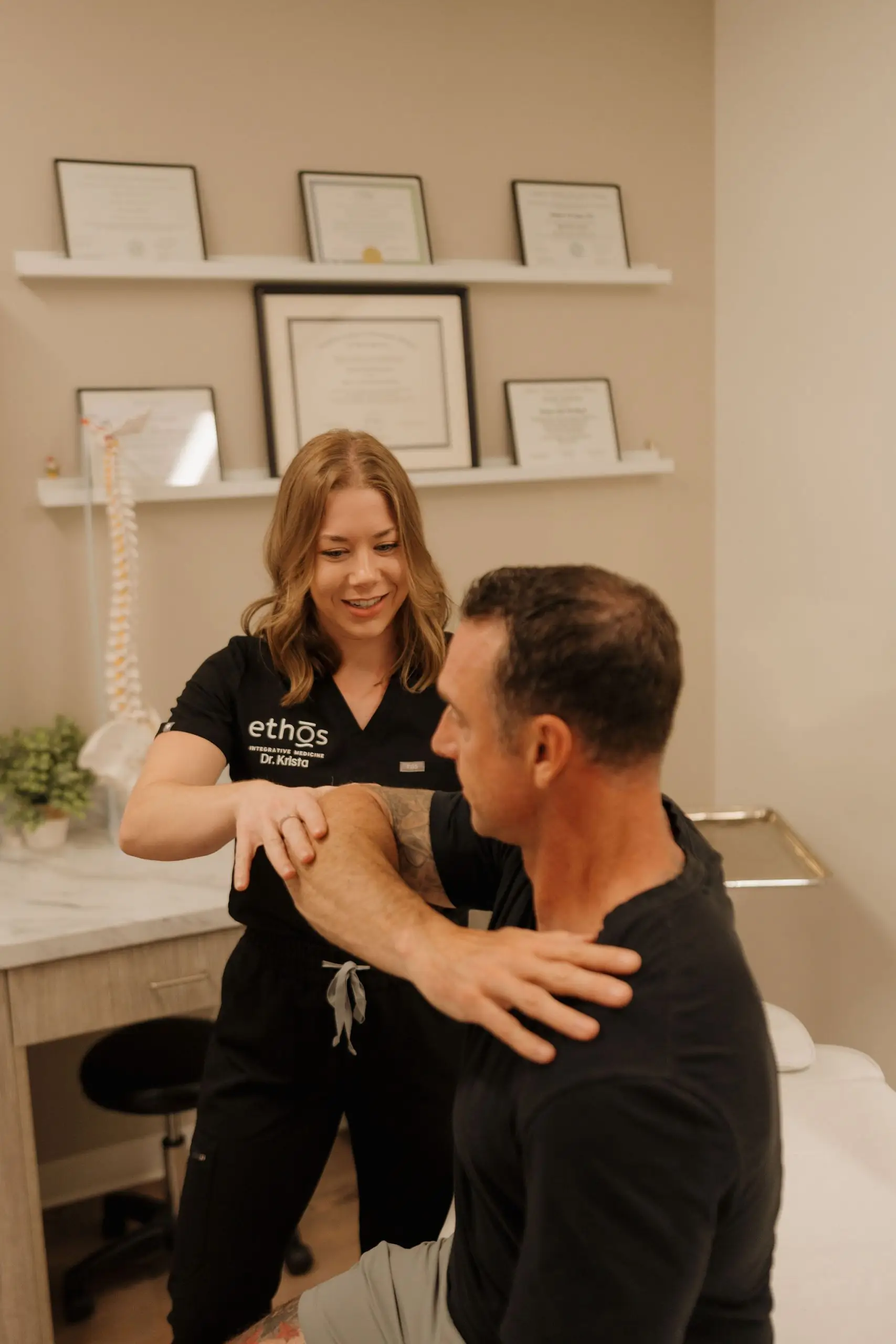
There are regenerative medicine providers across the Scottsdale metro. The patients who come to Ethos and stay consistently describe the same difference: a level of diagnostic precision, clinical reasoning, and genuine investment in their outcome that they had not found elsewhere.
Every regenerative procedure at our Scottsdale practice is preceded by a musculoskeletal ultrasound assessment. We confirm exactly what structure is involved and precisely where before any treatment begins. A partial rotator cuff tear and generalized shoulder tendinopathy may both present as shoulder pain. They are not the same injury and they do not warrant the same treatment. That diagnostic step is not optional at Ethos. It is the foundation of every clinical decision we make.
Many practices offer PRP and call it a regenerative medicine program. Ethos offers PRP, prolotherapy, BMC, and MFAT, and selects between them based on what the clinical picture actually calls for. A practice that offers only one treatment will recommend that treatment regardless of fit. We have no such constraint. The tool is chosen because it is right for your injury, not because it is what we happen to have.
The same diagnosis in two different patients does not automatically produce the same treatment recommendation at Ethos. Your imaging findings, treatment history, activity goals, and overall health all shape what we recommend. This level of individualization is what separates a precision regenerative practice from an injection service.
At Ethos, you are supported by a coordinated team of physicians and providers who are collectively committed to one outcome: yours. When care is built around your biology and delivered by people who are genuinely invested in your progress, the results tend to follow.
Ethos is a private-pay practice. Your clinical team’s recommendations are based entirely on what your presentation calls for. No insurance company is influencing the treatment decision. No coverage limitations are shaping the protocol. Patients from Scottsdale, North Scottsdale, Paradise Valley, Fountain Hills, and Cave Creek choose Ethos because that standard of care is worth the investment.
Regenerative orthopedics has moved well beyond experimental status. The right modality, selected for the right patient at the right stage of disease, changes the clinical picture. Ethos was built to make that determination with the precision and integrity it requires.
Book a Discovery Call to find out whether regenerative medicine is the right fit for your presentation. ethosscottsdale.com | 480-618-7545
Does regenerative medicine actually work?
For the right patient with the right diagnosis at the right stage of tissue damage, yes. The honest answer is that it does not work for everyone, and we will tell you that at the evaluation if you are not a good candidate. For well-selected patients, the evidence across PRP, prolotherapy, BMC, and MFAT is compelling. The most important factor is not which treatment you receive. It is whether the diagnosis is accurate and the selection criteria are met. That is what our evaluation is designed to establish before any treatment decision is made.
How long does it take to see results?
Regenerative medicine is not cortisone. It does not produce rapid short-term relief. What it produces is progressive improvement over weeks and months as the tissue responds and repairs. PRP and prolotherapy patients typically begin noticing changes at 4-8 weeks, with the clearest improvement over 3-6 months. BMC and MFAT often begin working within 1-2 months and reach peak effect around 6 months. In well-responding patients, that improvement can hold for 1-3 years or longer. Patients who commit to physical therapy alongside their treatment consistently see better and longer-lasting results.
What is the success rate of PRP?
For knee osteoarthritis in well-selected patients, studies consistently show 50-70% reporting clinically meaningful improvement. For rotator cuff tendinopathy, outcomes are similar. The number that matters more than any success rate statistic is whether you are the right candidate, and that is a question the evaluation at Ethos is designed to answer honestly rather than optimistically.
How does PRP compare to cortisone?
Cortisone is faster. PRP is better over time. Cortisone reduces inflammation quickly, which is why it feels effective early. It does not repair tissue, which is why it fades. PRP does the opposite: it initiates a repair process that builds over weeks and months. A 2024 meta-analysis of 3,696 patients found PRP delivered significantly better pain outcomes than cortisone at six months, with the difference widening over time. If you are looking for immediate relief before a major event, cortisone may still have a role. If you are looking for something that lasts, PRP is the more appropriate tool.
How many sessions will I need?
It depends on the treatment and the condition. PRP typically requires 1-3 injections for an initial course. Prolotherapy usually involves 3-6 sessions spaced 4-6 weeks apart because it works through a cumulative repair process. BMC and MFAT are often a single procedure per joint. Your protocol at Ethos is built around what your clinical picture calls for, not a package designed to maximize the number of visits.
What is recovery like after PRP?
Expect some soreness at the injection site for 24-72 hours. This is normal and is actually a sign that the healing response has been initiated. NSAIDs should be avoided before and after the procedure because they blunt the very process PRP is designed to trigger. After 24-48 hours of relative rest, a structured physical therapy program begins. Most patients return to light activity within a few days and to full activity over 4-8 weeks as the tissue heals and strengthens.
How much does regenerative medicine cost in Scottsdale?
Cost varies by treatment type, the number of sessions required, and the complexity of your presentation. PRP is typically the most accessible entry point. BMC and MFAT involve a more extensive harvest procedure and are priced accordingly. We discuss fees transparently before you commit to anything. HSA and FSA funds are generally eligible. We do not offer payment plans or discount programs, but we do give you a clear picture of what your protocol will cost before you decide to proceed.
Is regenerative medicine covered by insurance?
In most cases, no. Major insurers including Medicare classify PRP, prolotherapy, BMC, and MFAT for musculoskeletal indications as investigational and do not cover them. All regenerative procedures at Ethos are cash pay. HSA and FSA accounts can typically be used. Ethos is a private-pay practice by design, which means your treatment decisions are based on your clinical picture rather than your coverage tier.
What conditions respond best to regenerative medicine?
The strongest evidence exists for knee osteoarthritis, rotator cuff tendinopathy, chronic ligament instability, SI joint dysfunction, tennis elbow, plantar fasciitis, and hip degeneration at mild-to-moderate stages. Complete structural tears, end-stage disease, active cancer, uncontrolled systemic conditions, and bone-on-bone presentations are generally not appropriate candidates. If you are unsure whether your condition falls within the range where regenerative medicine has meaningful evidence, the evaluation will answer that question directly.
How do I know which treatment is right for my injury?
You will not know until you have had a proper diagnostic evaluation. That is not a limitation. It is the point. Treatment selection at Ethos is driven by your imaging findings, the tissue involved, the severity of the structural damage, and your history. We do not apply a default protocol. The Discovery Call is where that conversation begins and where you can ask every question you have before committing to anything.
Ethos Integrative Medicine proudly serves individuals in Scottsdale, Phoenix, Glendale, Mesa, and beyond.